
March 1, 2026
How Much Does Esthetician School Cost?
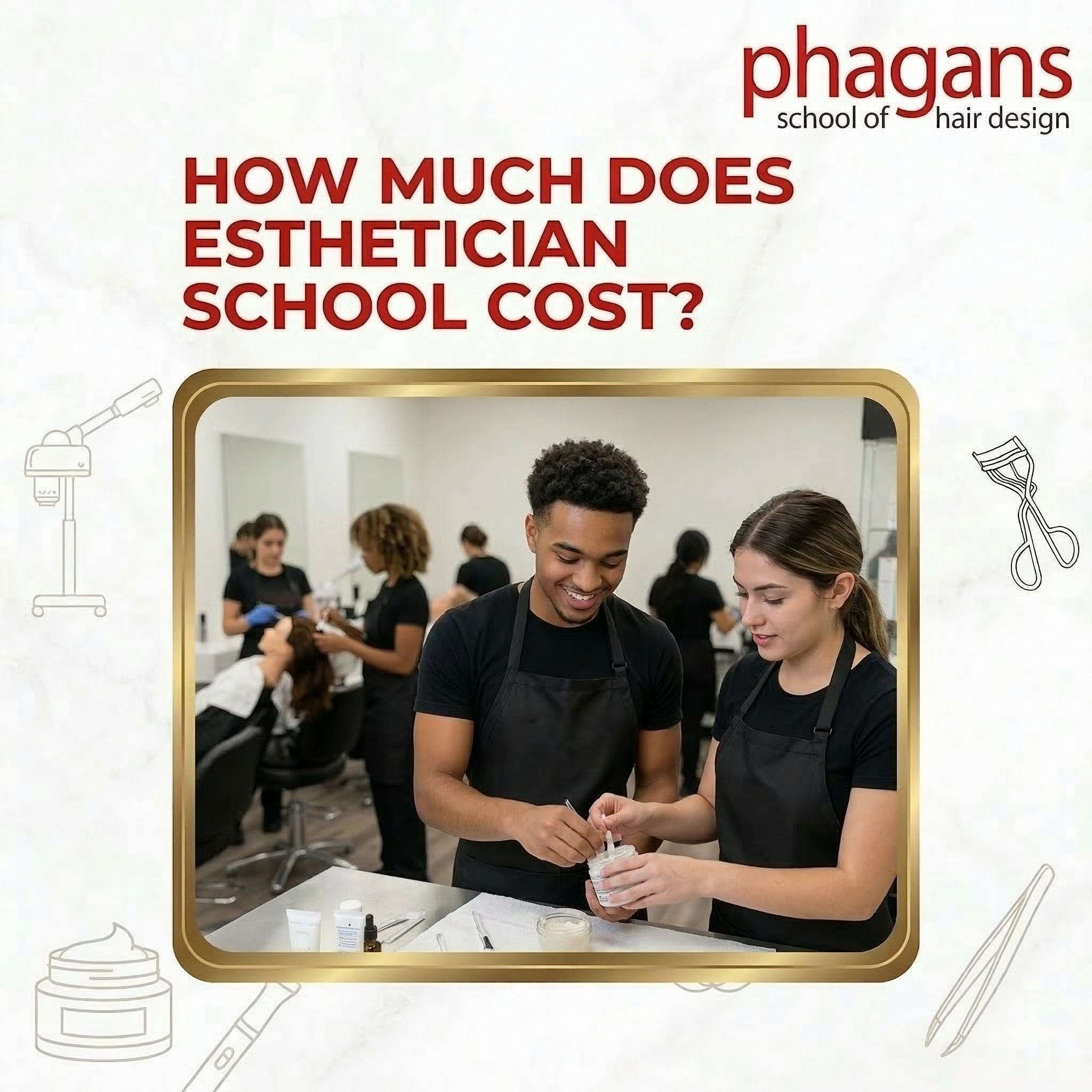
Esthetician school at Phagans School of Hair Design has an estimated total cost of $10,700 for its 600-hour Esthetics program, based on the published pricing in this article. That includes $9,300 in tuition and $1,400 for the student kit, books, and lab supplies. Students receive classroom education and supervised hands-on training in skincare services, with day and evening scheduling options. Phagans also helps prospective students explore scholarships, payment plans, and financial aid for those who qualify. Because tuition, fees, and schedules can change, contact the school for current pricing and enrollment information before making a decision.
If you’re considering a future in skincare, understanding the full cost of esthetician school can help you plan your education. Tuition is a major part of that decision, but supplies, time commitment, and your personal expenses are important too.
At Phagans School of Hair Design, the Esthetics program combines skincare education with practical training in a supervised student clinic environment. Knowing what your investment includes can help you compare programs and determine whether esthetics fits your interests, schedule, and budget.
Please note: All prices and program timelines below are based on the figures published in this article and are subject to change. Confirm current tuition, materials costs, schedules, and enrollment requirements directly with Phagans.
How Much Does Esthetician School Cost at Phagans?
The published estimated cost of the 600-hour Esthetics program at Phagans School of Hair Design is $10,700. This includes tuition, a student kit, books, and lab supplies.
Here is the published cost breakdown:
| Expense | Estimated Cost |
|---|---|
| Tuition | $9,300 |
| Student Kit | $388 |
| Books | $242 |
| Lab Supplies | $770 |
| Total Kit, Books, and Supplies | $1,400 |
| Total Estimated Program Cost | $10,700 |
This estimate includes the instructional and required materials costs identified in the original program pricing. Tuition accounts for $9,300, while the remaining $1,400 covers the listed kit, books, and lab supplies.
Students can explore the Esthetics program at Phagans School of Hair Design to learn more about the curriculum and training experience.
What to ask before enrolling: Request the latest tuition and materials breakdown, ask whether any costs are charged separately, and confirm when payments are due. Current prices may differ from the estimates shown here.
What Is Included in the Cost of Esthetician School?
The cost of esthetician school at Phagans includes classroom education, supervised practical training, and the professional tools and learning materials identified in the program’s published cost breakdown.
Understanding what you receive for the tuition and materials expenses can help you evaluate the program beyond its total price.
Skincare Education
Phagans’ 600-hour Esthetics curriculum focuses on developing knowledge and practical skills used in skincare services.
Students can learn about:
- Skincare treatments
- Makeup
- Body treatments
- Temporary hair removal
- Lash and brow tints
- Related skincare techniques and safety practices
The program introduces students to different services while helping them understand how treatments are performed, how to communicate with clients, and why sanitation matters.
Because esthetics combines technical knowledge with direct client interaction, students learn both the procedures and the professional practices involved in providing services.
Hands-On Student Clinic Experience
Practical experience is an important part of esthetics education. At Phagans, students work with real clients in a supervised student clinic environment as part of their training.
This allows students to:
- Practice techniques learned during classroom instruction
- Develop client consultation and communication skills
- Gain experience performing supervised services
- Receive instructor feedback
- Develop examples of their practical work for a portfolio
Working with clients during training gives students an opportunity to connect their classroom education with the experience of providing skincare services.
Ask how students progress from foundational instruction to supervised clinic work and which treatments are included in the practical curriculum.
Professional Kit, Books, and Supplies
The published $1,400 materials estimate includes $388 for the student kit, $242 for books, and $770 for lab supplies.
According to the original program description, these materials may include:
- Professional skincare tools
- Treatment products
- Practice materials
- Required textbooks
- Essential classroom supplies
These resources support classroom participation and practical training. Some tools may also be useful as students continue developing their skills after graduation.
Before enrolling, request an updated kit and materials list so you understand what is provided and whether anything must be purchased separately.
How Long Does Esthetician School Take at Phagans?
The Esthetics program at Phagans consists of 600 training hours. The original published schedule estimates completion in 25 to 33 weeks for the day program and 24 to 32 weeks for the evening program.
The published timelines are:
- Day Program: Approximately 25 to 33 weeks
- Evening Program: Approximately 24 to 32 weeks
Actual completion time can depend on the available class schedule, attendance, holidays, and successful completion of program requirements.
Having both day and evening options gives prospective students a way to compare training with other responsibilities, including work and family commitments.
When evaluating schedules, ask how many hours students attend each week, what the attendance policy requires, and how missed training time is handled.
Important: The 600 hours described here are the hours published for Phagans’ Esthetics program. State training requirements and approved school curricula may differ, so ask the school to explain how its program meets current Oregon requirements.
Why Does Esthetician School Cost What It Does?
Esthetician school costs reflect the instruction, equipment, supplies, and supervised practical experience involved in learning professional skincare services. Training requires more than classroom lectures because students must also practice techniques safely.
Hands-On Training and Equipment
Esthetics education involves treatment products, professional tools, practice materials, and spaces where students can develop practical skills.
Maintaining these resources and providing opportunities for supervised services are part of operating a hands-on training program.
When comparing costs between schools, ask which supplies are included and how practical experience is organized.
Instruction From Licensed Professionals
At Phagans, tuition supports instruction from licensed professionals, classroom education, clinic supervision, and preparation for state board requirements.
Instructors demonstrate techniques, explain procedures, evaluate student work, and provide feedback throughout training.
Students should ask how instructors support learners who need additional practice and how progress is evaluated.
Curriculum and State Requirements
Beauty schools must structure their education around applicable state rules and approved curriculum requirements.
Phagans publishes a 600-hour Esthetics curriculum that includes classroom and practical instruction. The program also includes preparation related to the Oregon state board process.
Completing school is not the same as receiving permission to practice. Eligible graduates can sit for the applicable state examinations and must meet Oregon’s credentialing requirements before practicing professionally.
Professional Development
Esthetics education involves more than learning how to perform treatments. Students also benefit from understanding client relationships, consultations, professional conduct, and business fundamentals.
These subjects can help students develop an understanding of the expectations they may encounter in a professional service environment.
Can You Get Financial Aid for Esthetician School?
Financial aid may be available for those who qualify in eligible esthetics programs. Students may also explore scholarships, grants, and payment plans depending on their circumstances and the options offered by the school.
At Phagans, prospective students can speak with the admissions or financial aid team to better understand available ways to pay for their education.
Possible funding resources include:
- Federal financial aid: Assistance available to eligible students in qualifying programs.
- Grants: Funding that generally does not require repayment when applicable conditions are met.
- Scholarships: Awards offered based on a provider’s specific requirements.
- Payment plans: Arrangements that may allow eligible students to pay educational charges over time.
- Personal savings: Funds students may choose to use toward school expenses.
Scholarships and financial aid are available only for those who qualify, and awards are not guaranteed.
The school’s financial aid team can explain application procedures, eligibility requirements, and how available assistance may apply to your program.
Learn more about financial aid and ways to manage the cost of education at Phagans before making an enrollment decision.
How Should You Budget for Esthetician School?
Budgeting for esthetician school involves looking at the total program cost, your expected payment schedule, and personal expenses you may have while attending classes.
The published $10,700 program estimate identifies tuition and required training materials, but your personal financial plan may involve additional costs.
Consider these steps:
- Confirm the current program price: Ask admissions for an updated breakdown of tuition, kits, books, supplies, and any other required charges.
- Review payment deadlines: Find out when tuition and materials payments are due and whether payment plans are available.
- Explore financial assistance: Ask about grants, scholarships, and financial aid for those who qualify.
- Calculate transportation expenses: Consider the cost of traveling to and from campus throughout your training.
- Plan for childcare or family responsibilities: Determine whether your school schedule will create additional personal expenses.
- Review your work schedule: Consider whether attending classes will affect your available working hours or income.
- Set aside room for personal expenses: Include everyday financial obligations and any anticipated examination or credentialing costs not covered by the program estimate.
Planning for these costs can help you understand the financial commitment before your first day of class.
If you have questions about payment timing or assistance eligibility, speak with the school before enrolling rather than relying on estimates alone.
Is Esthetician School Worth the Cost?
Whether esthetician school is worth the cost depends on your interest in skincare, your educational goals, the program’s training opportunities, and the financial commitment involved. A program may be a worthwhile educational choice when its curriculum and learning environment align with what you want to study.
Esthetics education can introduce students to services and professional environments associated with:
- Spas
- Salons
- Skincare studios
- Beauty and wellness businesses
- Specialized skincare services within the practitioner’s authorized scope
- Independent business opportunities, subject to applicable regulations
Some esthetics professionals work in settings that offer flexible scheduling arrangements, commissions, tips, or retail opportunities. These arrangements depend on the workplace, role, and individual circumstances.
Training does not guarantee a job, a particular schedule, a salary, or future earnings. It also does not automatically grant a professional credential.
Rather than focusing on a promised financial return, consider what the program teaches and whether the education fits your goals.
Ask about practical instruction, supervised client services, instructor guidance, and state licensing preparation. Those details can help you evaluate the educational experience alongside its cost.
How Does Esthetics Compare With Other Beauty School Programs?
Esthetics focuses primarily on skincare, while other beauty school programs may concentrate on hair services, nail care, barbering, or a combination of disciplines. Program length and cost vary based on the curriculum and applicable requirements.
In general:
- Esthetics: Concentrates on skincare treatments, makeup, body treatments, and other services within the esthetics scope of practice.
- Hair Design: Focuses on haircutting, coloring, styling, and related hair services.
- Nail Technology: Concentrates on nail care, nail enhancements, and related techniques.
- Combination Programs: Include education in more than one beauty specialty and may involve additional training requirements.
At 600 program hours, Phagans’ Esthetics course offers a focused skincare education with a different time commitment than some longer beauty programs.
If you’re interested in more than one specialty, compare curriculum content, total costs, schedules, and the state credentialing requirements associated with each field.
Choosing a program based on the services you want to learn can help you make a decision that reflects your interests rather than cost alone.
Who Is Esthetician School Right For?
Esthetician school may be a good fit for people who enjoy skincare, hands-on learning, creative services, and working directly with clients.
You may want to explore esthetics education if you:
- Enjoy learning about skincare treatments and beauty trends
- Like working one-on-one with people
- Want to develop practical skills through supervised training
- Prefer an educational program focused on skincare
- Are interested in spa or other skincare service environments
- Want to explore a profession involving consultations and client relationships
You don’t need to have every future goal decided before researching a program. Understanding what you enjoy and which skills interest you is a useful starting point.
At Phagans, prospective students can ask about curriculum, hands-on training, schedules, and the enrollment process to determine whether the Esthetics program matches their interests.
What Should You Ask Before Enrolling in Esthetician School?
Before enrolling in esthetician school, ask about the current total cost, program hours, class schedules, training materials, practical experience, financial aid eligibility, and licensing preparation.
Bring these questions to your admissions conversation:
- What is the current total tuition and materials cost?
- What exactly is included in the student kit?
- Are any required expenses charged separately?
- What do the day and evening schedules look like?
- How long does the program typically take to complete?
- What are the attendance and academic progress requirements?
- When do students begin supervised practical training?
- What support is provided for state examination preparation?
- What financial aid options are available for those who qualify?
- Are scholarships or payment plans available?
- What student support or career development resources are offered?
Reviewing the enrollment agreement, refund policy, and program requirements can also help you understand your responsibilities as a student.
Clear answers to these questions will help you compare educational options and plan for the commitment involved.
Frequently Asked Questions About Esthetician School Costs
How much does esthetician school cost at Phagans?
The published estimated cost for Phagans School of Hair Design’s 600-hour Esthetics program is $10,700. This includes $9,300 for tuition and $1,400 for the listed kit, books, and lab supplies. Prices are subject to change, so confirm current figures with the admissions team.
Does esthetician school tuition include supplies?
At Phagans, the published $10,700 total includes both tuition and the listed training materials. The original cost breakdown identifies $388 for a student kit, $242 for books, and $770 for lab supplies. Ask for the latest materials list and pricing before enrolling.
How long does esthetician school take in Oregon?
Program length depends on the school’s approved curriculum, scheduling, and completion requirements. Phagans publishes a 600-hour Esthetics program, with the original article estimating 25 to 33 weeks for its day schedule and 24 to 32 weeks for its evening schedule. Confirm current timelines directly with the school.
Can you get financial aid for esthetician school?
Financial aid may be available for those who qualify in eligible esthetics programs. Students may also explore scholarships, grants, and payment plans based on availability and eligibility. The Phagans financial aid team can explain current options and the application process. Assistance is not guaranteed.
What do students learn in esthetician school?
At Phagans, students can study skincare treatments, makeup, body treatments, temporary hair removal, lash and brow tints, and related professional practices. The program also includes supervised practical training, allowing students to apply classroom learning while developing client communication and technical skills.
Do you receive an esthetician license after graduating?
Graduating from esthetician school does not automatically grant state authorization to practice. Eligible graduates can sit for the applicable state examinations and must meet Oregon’s credentialing requirements. Ask the school how its curriculum prepares students for these steps and what requirements apply after program completion.
How Can You Get Started With Esthetician School at Phagans?
The first step is confirming the current program cost, scheduling options, and enrollment requirements with Phagans School of Hair Design.
The original published estimate of $10,700 covers tuition and the listed training materials for the 600-hour Esthetics program. Day and evening scheduling options allow prospective students to compare training with their personal responsibilities.
When you connect with the admissions team, you can:
- Confirm the latest tuition and materials prices
- Review the Esthetics curriculum
- Discuss available schedules and start dates
- Learn about financial aid for those who qualify
- Ask about scholarships and payment plans
- Understand enrollment and state licensing preparation
- Arrange a campus tour
Choosing esthetics education is an important decision. Understanding the full cost, what your training includes, and how the program fits your goals can help you move forward with confidence.
Ready to explore your options? Contact Phagans School of Hair Design to discuss Esthetics tuition and enrollment and learn more about the next steps.
Published prices and schedules are subject to change. Financial aid and scholarships are available for those who qualify, based on program eligibility and applicable requirements. Completing the program does not guarantee employment or state licensure.