
May 5, 2026
Cosmetology vs Hair Design
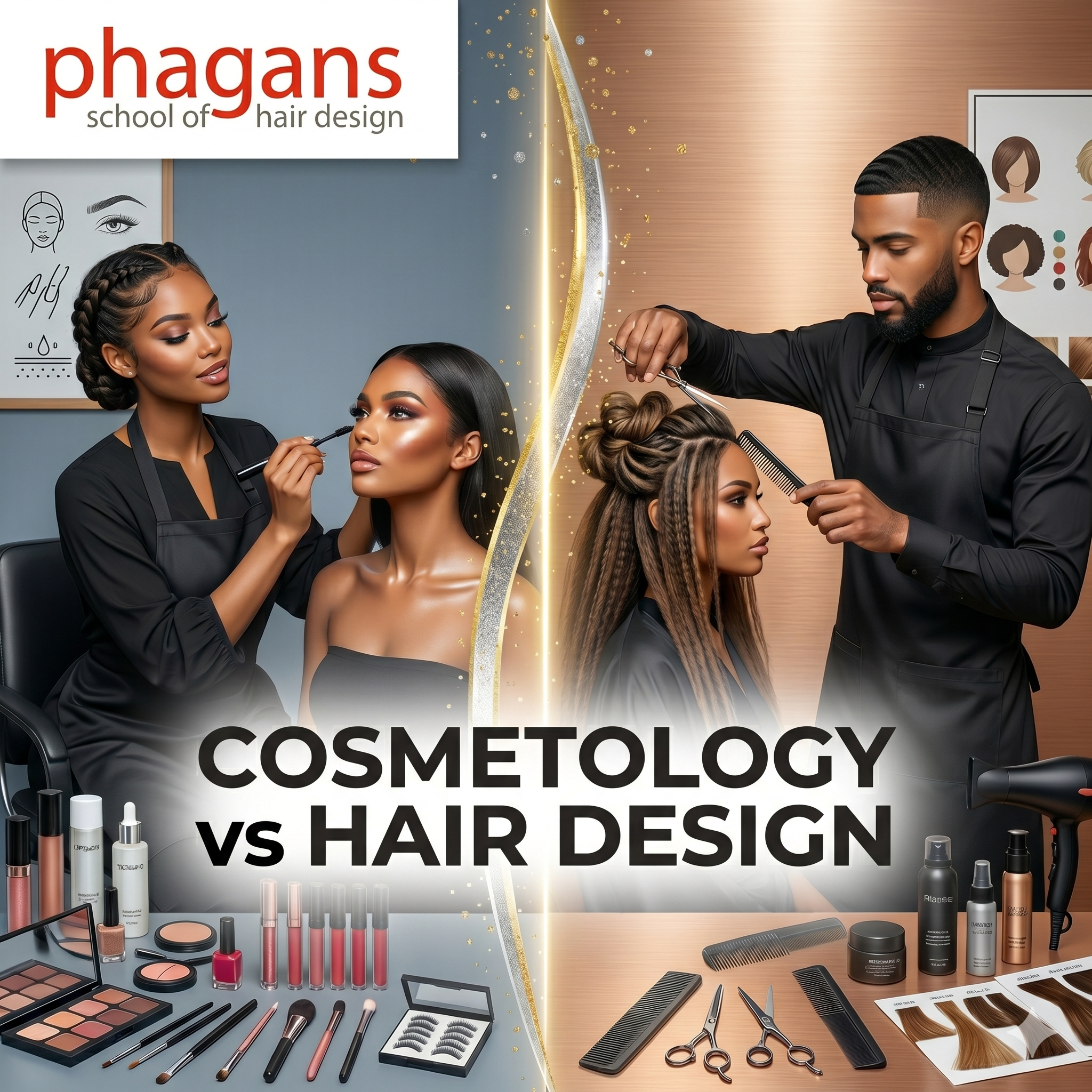
In Oregon, cosmetology and hair design are not the same thing. While many states offer a cosmetology license covering hair, skin, and nail services, Oregon regulates these services through separate fields of practice. Hair Design focuses on haircutting, coloring, styling, and chemical hair services, while esthetics and nail technology require their own credentials. At Phagans School of Hair Design, students can train in an individual specialty or explore combination programs that bring multiple areas of beauty education together. This allows students to choose training based on the services they want to learn and their educational goals.
If you’re researching beauty school, you’ve probably seen the term cosmetology used often. In many states, becoming a cosmetologist means completing a single program that teaches hair, skin, and nail services. But if you’re planning to study in Oregon, you’ll notice something different.
Oregon’s beauty licensing system doesn’t include a single, all-purpose cosmetology license. Instead, the state divides the beauty industry into separate specialties, allowing professionals to train in specific areas such as hair, skincare, and nails.
At Phagans School of Hair Design, students can pursue one specialty or build additional skills over time through multiple programs. This gives aspiring beauty professionals the flexibility to specialize or expand their education across multiple areas of the industry.
What Is the Difference Between Cosmetology and Hair Design?
The main difference between cosmetology and hair design is the range of beauty services covered. Traditional cosmetology programs generally include hair, skin, and nail education, while Oregon Hair Design training focuses specifically on hair services.
| Category | Traditional Cosmetology | Oregon Hair Design |
|---|---|---|
| Primary focus | Hair, skin, and nail services | Hair services |
| Haircutting and styling | Generally included | Included |
| Hair coloring and chemical services | Generally included | Included |
| Skincare and facials | Often included | Requires separate esthetics authorization in Oregon |
| Manicures and nail enhancements | Often included | Requires separate nail technology authorization in Oregon |
| Credential structure | Often one cosmetology license, depending on the state | Oregon authorizes individual fields of practice |
In states with traditional cosmetology licensing, students often receive an education that introduces several beauty disciplines within one program.
In Oregon, students can choose the specialty that matches their interests and pursue additional training if they want to offer other services later.
At Phagans, students interested in more than one specialty can also explore combination programs, subject to enrollment and payment requirements.
How Does Cosmetology Usually Work in Other States?
In many states across the United States, cosmetology is an all-in-one beauty education that combines instruction in hair, skin, and nail services. Students complete their state’s required training and must meet applicable examination and licensing requirements before practicing professionally.
A typical cosmetology program may cover:
- Hair cutting and styling
- Hair coloring and chemical services
- Basic skincare and facials
- Manicures and pedicures
- Nail enhancements
- Hair removal services
- Sanitation and safety practices
Because the program covers multiple disciplines, cosmetology is often considered an all-in-one approach to beauty education.
However, the services a cosmetology license permits can vary by state. Anyone planning to practice in a particular state should review that state’s licensing requirements.
Oregon approaches beauty licensing differently by dividing the industry into individual fields of practice rather than offering one general cosmetology credential that covers every service.
How Does Beauty Licensing Work in Oregon?
Oregon regulates beauty services through individual fields of practice overseen by the Oregon Health Authority’s Board of Cosmetology and Health Licensing Office. Practitioners must obtain the appropriate state authorization for the services they intend to perform.
The main regulated fields include:
- Hair Design: Hair cutting, coloring, styling, and other services within the hair design scope of practice.
- Esthetics: Skincare services, including certain facial treatments and hair removal services.
- Nail Technology: Nail care services, including manicures and nail enhancements.
- Barbering: Services within Oregon’s separate barbering scope of practice.
- Natural Hair Care: Services defined under Oregon’s natural hair care regulations.
The Oregon Health Authority provides information about the requirements and scope of each field through its Board of Cosmetology.
For example, someone interested in cutting and coloring hair would pursue Hair Design. Someone interested in facials and skincare treatments would explore Esthetics. Someone who wants to provide professional nail services would pursue Nail Technology.
Professionals who want to offer services across multiple regulated fields must obtain the appropriate authorization for each field.
What this means for students: You can begin with one specialty rather than training in every beauty discipline at once. If you later want to expand the services you provide, you can explore additional education and licensing requirements.
What Do You Learn in an Oregon Hair Design Program?
An Oregon Hair Design program focuses on the skills and knowledge used in professional hair services, including haircutting, coloring, chemical treatments, styling, and client consultations.
Hair design education combines technical instruction with practical experience, helping students learn how to perform services safely and communicate with clients.
Hair Cutting
Haircutting is a foundational part of hair design education. Students learn techniques used to create different shapes, lengths, and textures.
Training may include:
- Precision cutting
- Layering
- Texturizing
- Men’s and women’s haircuts
Students practice these techniques as they develop an understanding of haircut structure, client preferences, and the tools used for different services.
Hair Coloring
Hair coloring is another important part of hair design training. Students learn about color applications, product selection, and the techniques used to achieve different results.
Training may include:
- Single-process color
- Highlights and lowlights
- Balayage techniques
- Toners and gloss treatments
- Color correction
Understanding how hair responds to color products and techniques is an important part of developing practical coloring skills.
Chemical Hair Services
Hair design education also includes chemical services that change hair texture or appearance. These services require technical knowledge, careful application, and attention to safety procedures.
Students may study:
- Permanent waves
- Relaxers
- Smoothing treatments
Instruction helps students understand how these services work and why product directions, consultations, and sanitation practices matter.
Styling and Finishing
Styling techniques help students learn how to finish different haircuts and color services for everyday wear and special occasions.
Students may practice:
- Blowouts
- Curling and flat ironing
- Updos and formal styles
- Bridal and event hair
These techniques allow students to explore different looks while practicing tool handling, styling methods, and service planning.
Client Consultations and Professional Skills
Hair design education also involves communication and professional conduct. Students learn how to discuss services with clients, understand their preferences, and make informed product and service recommendations.
Training may cover:
- Client consultations
- Product recommendations
- Service planning
- Professional etiquette
At Phagans, students receive hands-on education that includes opportunities to work with real clients under instructor supervision.
Hair Design training may prepare students to explore professional opportunities in hairstyling, hair coloring, bridal styling, and other hair-focused services after meeting applicable licensing requirements.
Can You Study Hair, Skin, and Nails Together in Oregon?
Yes. Although Oregon does not offer a single traditional cosmetology license covering every beauty specialty, students can pursue training in multiple fields. This may involve completing individual programs over time or enrolling in an available combination program.
At Phagans School of Hair Design, students typically enroll in an individual licensed program such as Hair Design, Esthetics, or Barbering. Financial aid may be available for those who qualify for eligible individual programs.
Students who are self-funding their education may also explore combination programs that cover multiple beauty disciplines.
Phagans combination program options include:
- Hair Design, Nail Technology, and Esthetics: A combination option for students interested in training across hair, skin, and nail services.
- Hair Design and Nail Technology: An option for students interested in hair services and nail care.
- Hair Design and Esthetics: An option for students interested in hair services and skincare.
- Esthetics and Nail Technology: A combination option for students interested in skincare and nail services.
Important financial aid information: Phagans combination programs are cash-pay only and are not eligible for financial aid. Financial aid may be available for those who qualify when enrolling in eligible individual programs. Confirm current enrollment options and payment requirements with the school.
Some students choose to complete one program first, especially when exploring financial aid for those who qualify. Others may prefer to self-fund a combination program and train in multiple areas during the same period of education.
Each field still has its own applicable state credentialing requirements. Completing a combination program does not automatically grant authorization to perform every service.
What Are the Benefits of Oregon’s Specialty-Based Licensing System?
Oregon’s specialty-based licensing system allows students to focus their education on a particular field while retaining the option to pursue additional training later.
Specialized Training
Each program focuses on the knowledge and techniques relevant to its field of practice.
For example:
- Hair Design emphasizes haircutting, coloring, and hair services.
- Esthetics focuses on skincare science and treatments.
- Nail Technology focuses on nail care and artistry.
This structure allows students to spend their training time developing skills relevant to the specialty they want to study.
Flexibility to Add Another Specialty
Students may begin with one specialty and decide to pursue another area later as their interests develop.
A hairstylist might choose to study esthetics. A nail technician might explore hair design. An esthetician might pursue nail technology to learn additional services.
Each additional area involves its own educational and state requirements, but students do not necessarily have to choose every area of beauty education at the beginning.
More Choices in How to Train
Students can compare individual programs with combination options based on their goals, available schedules, and financial circumstances.
At Phagans, eligible individual programs may offer financial aid for those who qualify, while combination programs are available on a cash-pay basis.
This gives prospective students different educational options to discuss with the admissions team before making an enrollment decision.
How Do You Choose Between Hair Design and a Combination Program?
The right choice depends on whether you want to focus on hair services or receive education in multiple beauty disciplines. Your interests, schedule, educational requirements, and plans for paying for school can all influence that decision.
Consider the following steps:
- Identify the services you want to learn: If you’re most interested in haircutting, coloring, and styling, Hair Design may fit your goals. If you also enjoy skincare or nails, explore the related specialties.
- Compare program content: Review what each program teaches and how training is structured.
- Understand state requirements: Learn which fields of practice require separate credentials and what happens after program completion.
- Review your payment options: Ask about the total program cost and whether financial aid is available for those who qualify. Remember that Phagans combination programs are cash-pay only.
- Consider future education: Decide whether you would prefer to begin with one specialty and potentially add another later.
- Talk with admissions: Ask about program availability, schedules, enrollment requirements, and the next steps for your preferred course of study.
Some students prefer to concentrate entirely on hairstyling. Others want to learn services from different areas of the beauty industry.
Neither approach is right for everyone. The purpose of comparing programs is to choose an educational path that fits your interests and circumstances.
What Is Hands-On Training Like at Phagans School of Hair Design?
Students at Phagans School of Hair Design receive hands-on training designed to help them build practical skills and become familiar with professional salon environments.
Depending on the program, education may include:
- Haircutting and coloring techniques
- Chemical hair services
- Styling and finishing
- Skincare treatments and facials
- Waxing services
- Nail care and enhancements
- Client consultations
- Sanitation and safety procedures
Because beauty services involve working directly with clients, practical education is an important part of training.
At Phagans, students have opportunities to apply what they learn while working with real clients under instructor supervision.
These experiences allow students to practice technical services, develop communication skills, and receive feedback as they progress through their education.
If you’re comparing Hair Design with a combination program, ask how practical training differs between the options and what services students practice during each program.
What Career Paths Can Hair Design and Beauty Training Support?
Hair design and other beauty programs can provide education relevant to a range of professional services and work environments. The opportunities a graduate can pursue depend on their training, applicable state authorization, individual skills, and employer or business requirements.
Beauty professionals may explore work in settings such as:
- Hair salons
- Spas
- Resorts
- Beauty boutiques
- Bridal and event styling
- Fashion and photography styling
Some licensed professionals also choose to explore independent work, freelance services, salon suites, or business ownership, subject to applicable regulations and business requirements.
Someone specializing in Hair Design might explore hairstyling, hair color, or event hair services. Someone with additional authorization in esthetics or nail technology may be able to offer services in those fields as well.
Beauty school provides an educational foundation, but program completion does not guarantee employment, income, business success, or state licensure.
Frequently Asked Questions About Cosmetology and Hair Design in Oregon
Is cosmetology the same as hair design in Oregon?
No. Cosmetology programs in many states cover hair, skin, and nail services within a single licensing pathway. In Oregon, Hair Design is a separate field of practice focused on hair services. Esthetics and Nail Technology have their own credentialing requirements.
Does Oregon have a cosmetology license?
Oregon regulates cosmetology through individual fields of practice rather than one general license covering hair, skin, and nails. These fields include Hair Design, Esthetics, Nail Technology, Barbering, and Natural Hair Care. The Oregon Health Licensing Office uses field-specific certification terminology for practitioners.
Can a hair designer do nails or facials in Oregon?
A Hair Design credential alone does not authorize someone to perform all nail or skincare services. Professionals who want to provide services in Nail Technology or Esthetics must meet the applicable requirements for those fields of practice.
Can you take a cosmetology-style combination program in Oregon?
Yes. Schools such as Phagans offer combination programs that include multiple beauty disciplines. Phagans offers options combining Hair Design, Esthetics, and Nail Technology. These combination programs are cash-pay only and are not eligible for financial aid.
Is financial aid available for Hair Design school in Oregon?
Financial aid may be available for those who qualify in eligible individual beauty school programs. At Phagans, students can explore financial aid eligibility for individual programs such as Hair Design, Esthetics, or Barbering. Combination programs are cash-pay only and are not eligible for financial aid.
Can you add another beauty specialty after completing Hair Design?
Yes. Students who complete Hair Design training may choose to pursue additional education in specialties such as Esthetics or Nail Technology. Each field has its own educational and state credentialing requirements, so students should review the applicable steps before enrolling in another program.
Start Your Beauty Education at Phagans School of Hair Design
Understanding the difference between cosmetology and hair design is an important step when exploring beauty education in Oregon.
While many states offer a single cosmetology license, Oregon focuses on individual specialties such as Hair Design, Esthetics, and Nail Technology. Students can begin with one program or explore training in multiple fields based on their goals and circumstances.
At Phagans School of Hair Design, students can develop hands-on skills, explore different areas of the beauty industry, and receive guidance as they compare educational options.
Whether you’re interested in hairstyling or want to train across multiple beauty disciplines, our team can help you understand program options, enrollment requirements, and ways to pay for school, including financial aid for those who qualify in eligible individual programs.
Ready to explore your options? Contact Phagans School of Hair Design to learn about programs and enrollment and find out which educational path may be right for you.
Financial aid is available to those who qualify for eligible individual programs. Phagans combination programs are cash-pay only and are not eligible for financial aid.